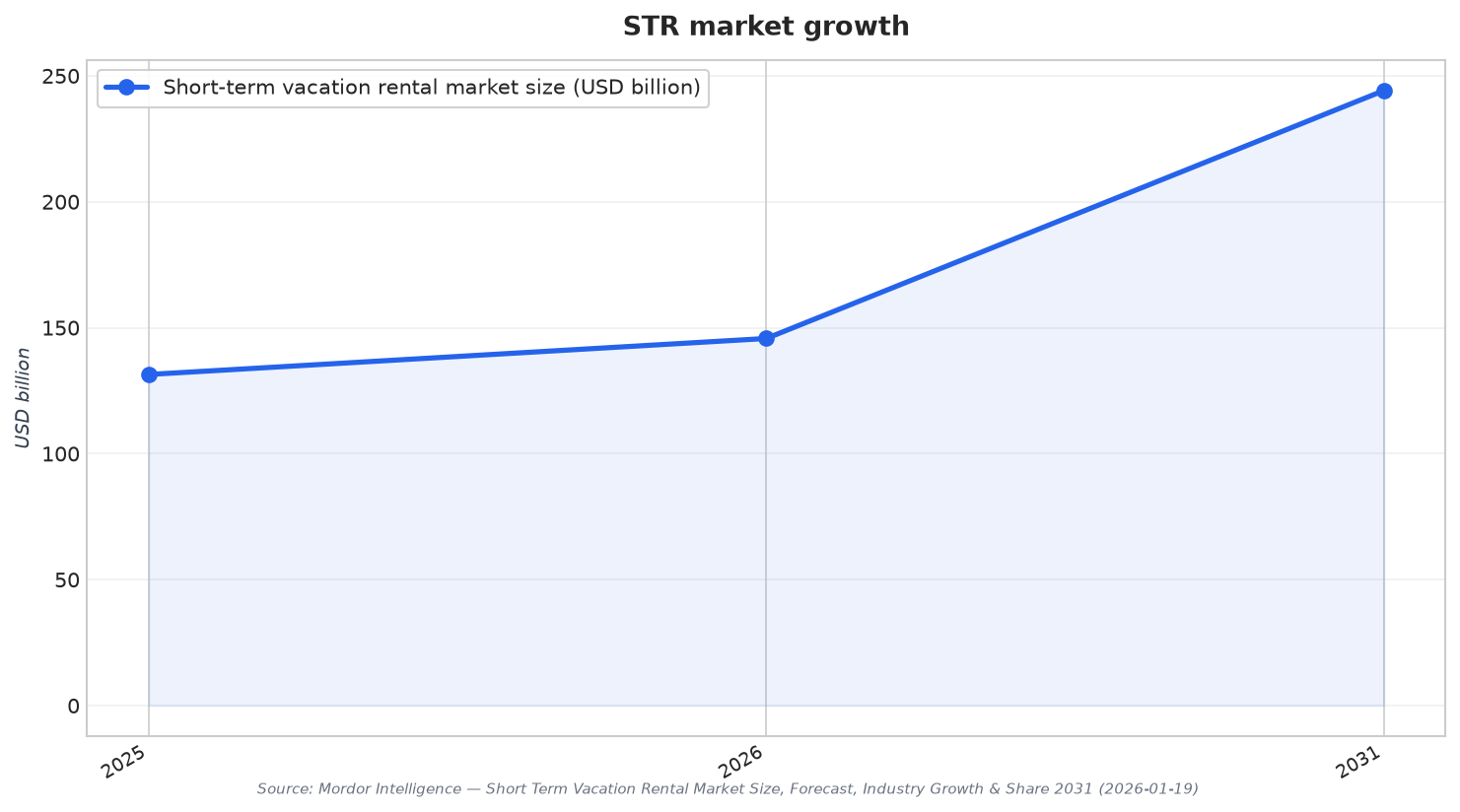
Moving from “permission to operate” toward a formal license mindset changes how owners build and defend a holiday-home portfolio. That shift matters because the broader short-term rental category is growing, but it is also becoming more compliance-driven. Mordor Intelligence projects the short-term vacation rental market to grow from USD 131.45 billion in 2025 to USD 145.73 billion in 2026, reaching USD 244.13 billion by 2031, at a 10.86% CAGR over 2026–2031. In parallel, SuiteOp frames 2026 as the year regulation shifted from bans to enforcement infrastructure. In Saudi Arabia, thinking early about a private hospitality unit license can shape acquisition choices, operating processes, and which units remain investable under tighter oversight.
Licensing regimes reward operators who can standardize documentation and prove repeatable controls across many units. The market data and commentary in the sources point to that direction, even when they describe other geographies. For example, SuiteOp notes that platform-enforced regulation increasingly demands an audit trail supported by guest verification and compliance documentation. The same piece also argues growth is coming more from expansion into new markets and property types than from existing operators getting outsized demand on current portfolios. That suggests portfolio strategy is not only about adding doors. It is also about ensuring every door can pass a licensing test without adding a proportional amount of staff time and manual work.
What Licensing-First Regulation Changes in Portfolio Math
Licensing-first thinking changes portfolio math because it favors scale, systems, and fewer exceptions. Mordor’s vacation rental methodology explicitly includes city-level license issuance among the variables feeding its outlook model, alongside platform fee trajectories and occupancy seasonality patterns. In practice, that kind of focus pushes operators toward tech-enabled, professionally managed inventory that can withstand inspection and reporting requirements. The same source describes how professional management platforms pursue scale through mergers, citing Casago’s May 2025 purchase of Vacasa for USD 128.6 million, creating a 40,000-unit portfolio with unified revenue-management software and a shared housekeeping workforce. The deal is not about Saudi Arabia specifically, but it illustrates the playbook: consolidate operations so compliance and service standards are consistent across units.
Regulatory friction can also be highly specific, and that is why licensing readiness needs to be assessed unit by unit. In Dubai, short-term rentals are regulated through a mandatory registration and permitting system overseen by the Department of Economy and Tourism (DET), and all holiday homes must be licensed while meeting property standards and registration rules. A key provision highlighted in the sources is that permit approval requires unanimous consent of all neighbors in the building, which creates a high administrative threshold for legal operation. Saudi Arabia’s private hospitality unit license path is distinct, but the comparison shows how a single rule can reshape a portfolio by making some buildings operationally impractical, regardless of demand.
Operators also need to separate “market growth” from “portfolio growth.” Mordor reports that apartments and condominiums held 47.92% of short-term vacation rental market share in 2025, while unique stays are projected to grow at a 14.32% CAGR to 2031. Booking is also platform-led, with online travel agencies capturing 64.75% of revenue in 2025. Those figures are global category signals, not Saudi-specific results, but they reinforce why licensing and platform compliance matter: distribution is concentrated, and standardized regulation can raise costs for smaller hosts. The operators best positioned for a Saudi Arabia private hospitality unit license are those building portfolios around repeatable unit standards, centralized documentation, and scalable guest operations.
How does a private hospitality unit license in Saudi Arabia affect holiday-home portfolio strategy?
What global market figures show the category is expanding even as regulation tightens?
Which accommodation types and channels are most prominent in the sources’ market breakdown?
What example shows how a single rule can raise the threshold for legal operation?
What deal in the sources illustrates consolidation for standardized operations?
Talk to us for your needs in:
-
Tourism Infrastructure Planning and Optimization
-
Destination Marketing and Brand Strategy
-
Tourism Workforce Development and Training
-
Sustainable Tourism Solutions
-
Visitor Experience Enhancement and Engagement
-
Tourism Project Feasibility and Strategic Planning
-
Saudi Tourism Benchmarking